
Appleton Resident Lookup Sources
No master list exists for Appleton. A resident lookup is really a match made across records. The Outagamie County tax roll ties a person to ownership. It works two ways at once. The situs address identifies the parcel. The mailing address shows where tax notices actually go. Wisconsin MyVote can confirm a registration when the name and birth date line up. WCCA adds dated court activity to the picture. Vital indexes corroborate a life event once the statutory waiting period passes. Certified copies carry stricter eligibility rules than the index itself, so plan around that limit.
| Record | What It Confirms | Where to Search | Access |
|---|---|---|---|
| Property roll | Owner, parcel, situs and mailing address | Outagamie Ascent | Public web portal |
| Voter registration | Status, election address and activity | Wisconsin MyVote | Name and birth date or address search |
| Court docket | Party, case type, dates and disposition | WCCA | Public index; files at clerk |
| Vital record | Birth, death, marriage or divorce event | Wisconsin DHS and county registrar | Public index periods; copies restricted |
| Credential or entity | License status or registered business link | DSPS and DFI | Public search; copy orders separate |
Let your strongest fact pick the first record. An address points to Ascent. A full name plus birth date fits MyVote. A case number or party name belongs in WCCA. A marriage or death date sends you to the vital index. Company names work through the registered-agent field, but read them carefully. A registered office is just a filing address, not proof of where anyone actually lives.
Search Appleton Court Names
The Wisconsin Circuit Court Access index works best with Outagamie picked in the county filter. Simple Search takes a party name, a business name, or a case number. Advanced options narrow things by case type. The judgment and reports tabs answer different queries entirely. Official guidance suggests trying just the beginning of a first name. It also suggests dropping a middle initial when strict spelling returns nothing. That flexibility helps with name variants. It also raises the odds of grabbing the wrong person. So refine before trusting a hit.
| Search control | Use in a resident lookup |
|---|---|
| Party name | Last, first and middle fields; try a partial first name |
| Birth date | Optional identity refinement |
| County | Select Outagamie instead of Statewide |
| Case number | Exact direct search |
| Case type | Narrow the advanced results |
A WCCA hit is only a docket index. The Outagamie County Clerk of Circuit Court keeps the pleadings, exhibits, transcripts, and the complete public file. Requests go through by phone or fax, by email after payment arrangements, or in writing to the Justice Center. Copies run $1.25 per page under Wis. Stat. §814.61(10). When web access fails, a courthouse terminal offers another route.
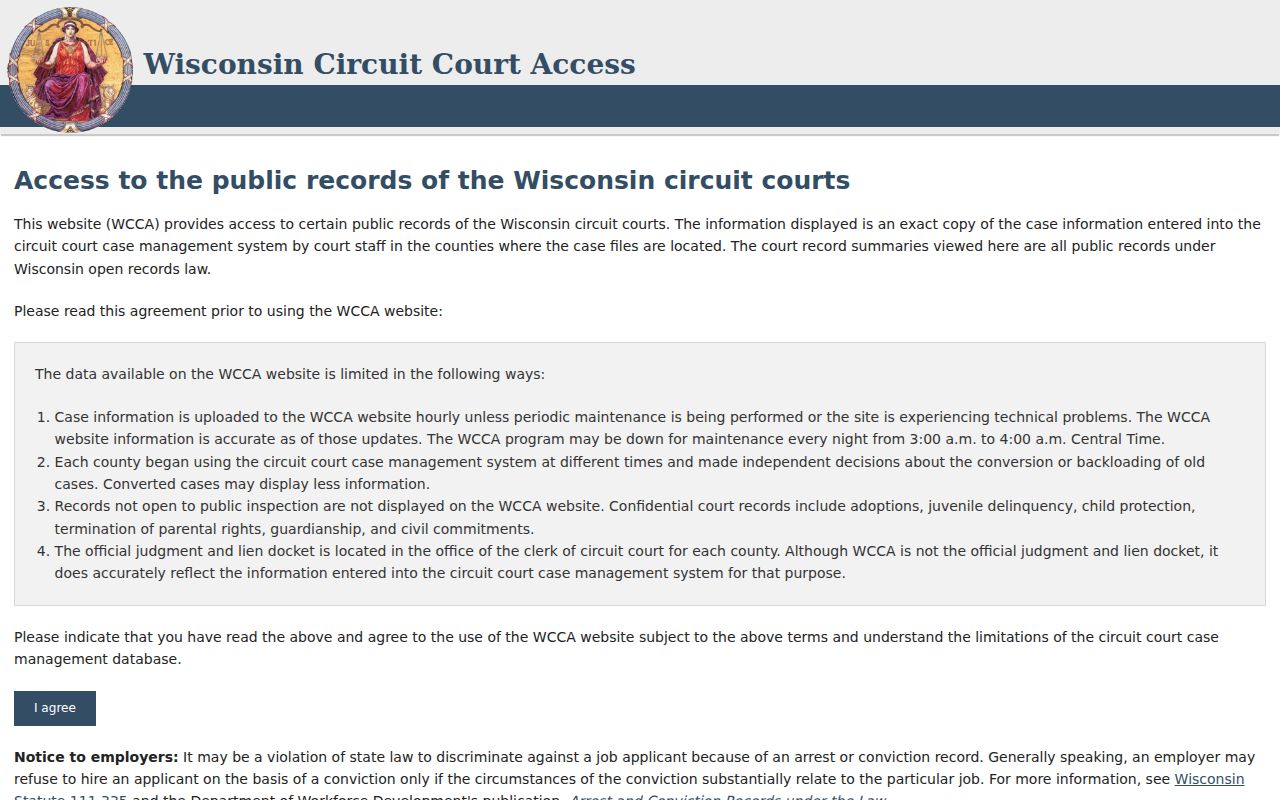
The search screen itself shows why county and identity filters matter so much before any name counts as a match.
Verify Appleton Resident Records
Reach for two or three agreeing records before concluding anything. A name alone is weak evidence. Initials muddy it, and so do changed surnames and common spellings. Dates strengthen a match considerably. So do a parcel number, a shared mailing address, an organization, or a relative named in probate. A consistent middle name helps too. Keep the record date in view throughout. A correct old address can still be flat wrong today.
- Anchor the name to an address through Ascent ownership data or the name-and-birth-date mode in MyVote.
- Search WCCA for the full name and reasonable variants, then compare county, dates, case role, and case type.
- Use an open vital index, obituary, or probate file to test a family or event link. Do not assume a certified certificate is open to everyone.
- Request the underlying public file or an eligible certified copy from its custodian when the index cannot settle the identity.
- Docket
- The dated list of filings and events in a court case.
- Index vs image
- An index points to a record. An image shows the filed document itself and may require a request or fee.
- Certified copy
- An official copy issued with the custodian's authentication, often under eligibility and identification rules.
Wisconsin DOJ warns that a criminal-history name match may return someone else's record. Check the master name, the identifiers, the record date, the current status, and the actual court judgment. DOJ also runs mistaken-identity and incorrect-information procedures, including a fingerprint-removal route where it applies.
Confirm Appleton Voter Details
MyVote Wisconsin asks for first name, last name, and birth date in name mode. Address mode wants street, unit, city, and ZIP. A profile can show the registered name, status, current election address, the reason a registration is active or inactive, and voting activity. It never reveals a ballot choice. Wisconsin registers no one by party preference. The separate Badger Voters system is a paid request-and-download service, not a public lookup. It supplies voter lists, custom data, absentee data, historical boundary requests, and nomination-paper scans. Login now runs through My Wisconsin ID with multifactor authentication. Protected voters are excluded. Activity older than ten years can still be requested through that channel.
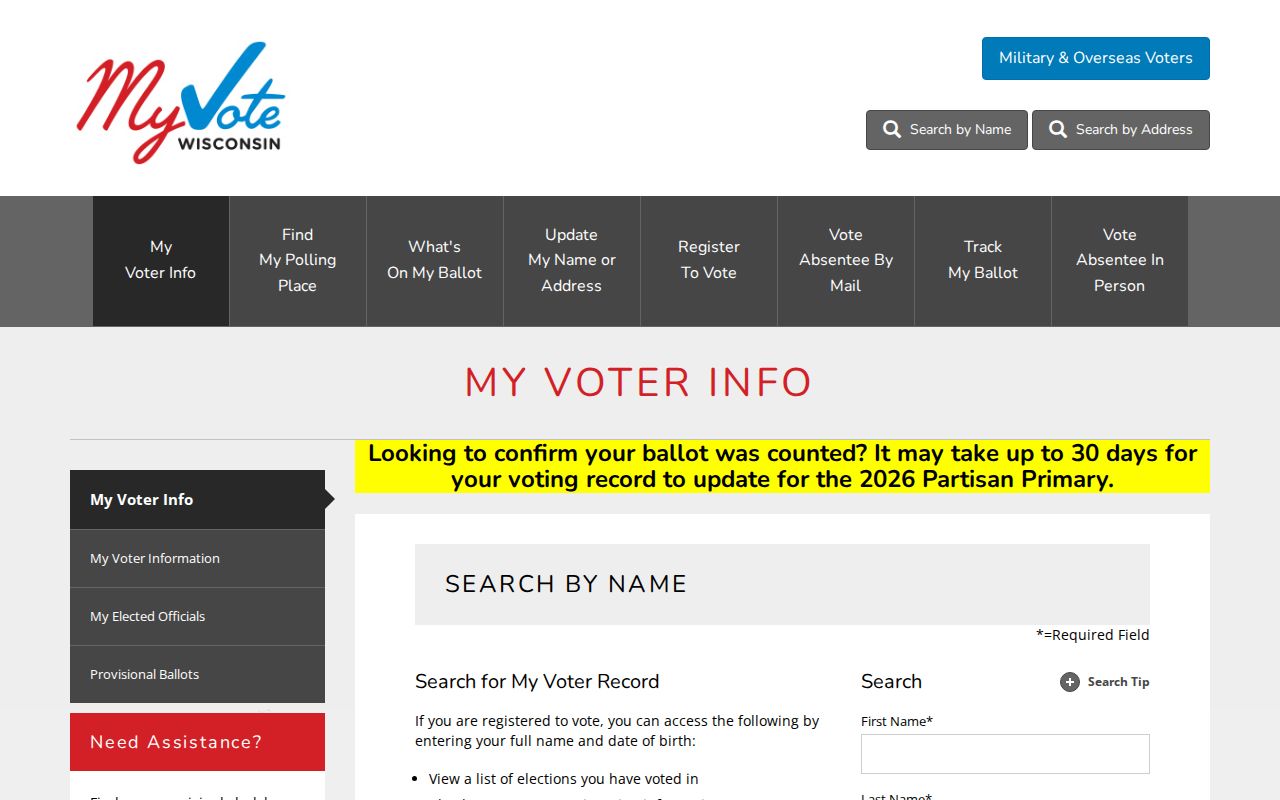
The screen keeps name and address modes apart, so use whichever mode your verifiable facts can actually support.
Check Appleton Vital Indexes
Vital records carry tighter limits than a court index. The Outagamie Register of Deeds handles authorized local counter and mail service. Wisconsin DHS serves as the statewide issuer and genealogy authority, and the county adds an online VitalChek order route. In-person applicants must show valid, unexpired government identification. Mail requests need the application, an identification copy, payment, proof where required, and a stamped return envelope.
Wis. Stat. §§69.20 and 69.21 govern eligibility and index access. Birth-index entries open for public copying after 100 years. Death, marriage, divorce, domestic-partnership, and annulment entries open after 24 months, though restricted fields and certified-copy rules still apply. DHS offers no general online name database for genealogy. Its historical research route works by appointment, with libraries, parishes, cemeteries, newspapers, and archives filling the early gaps.
The application options make one point plain. An index clue and the right to a certified copy are two different things.
Reconnect Through Appleton Archives
An old school source often separates two same-name people better than a current roll does. The Appleton Public Library's Jabas Collection holds yearbooks and directories. It also holds newspaper microfilm. The collection adds an obituary and Post-Crescent index. The library also offers a free research session plus scan or email help. Lawrence University and other institutional archives add alumni publications, yearbooks, and organization records. Their alumni rosters, though, are not open to the public.
Heir searching works down a different path. Run the name through WCCA for an Outagamie probate case. If the docket points to an estate, ask the clerk to see the public file. Obituaries can name relatives. Deeds can tie a decedent or fiduciary to a parcel. Every item here is dated evidence, so treat it that way. No single record proves a current address or a current family tie.
Match Appleton Credentials Carefully
The Wisconsin DFI Corporate Search returns an entity name and type, registration date, registered agent and office, entity ID, filing history, status, and latest annual-report year. It will not show a federal employer number. It also leaves out domestic LLC members, phone numbers, sole proprietors, and trade names. Treat it as proof of a filing relationship rather than of residence.
DSPS License Verification identifies a credential holder, credential number, board, status, and any discipline displayed. The profession directory covers regulated fields and links to the board rules that govern them. For a nonindexed filing, DFI accepts open-record requests by email, mail, and in person. A known credential that lines up with other dated facts can separate same-name people cleanly.
Read Appleton Lookup Results
Record any resident lookup hit as fields, never as a loose name. WCCA gives the party role, county, case number, case type, dates, docket events, and any public disposition. Ascent adds the parcel, legal description, owner, situs and mailing address, and tax context. MyVote provides registration details within its legal scope.
- Identity field and the exact spelling used
- Record role, such as owner, plaintiff, defendant, agent, or credential holder
- County, parcel, case, entity, or credential identifier
- Filing, event, tax, or activity date
- Status, disposition, or document reference
Fields make conflicts plain. When a date, county, or role does not fit, call the hit unconfirmed and go back to the custodian instead of forcing a match.
Appleton Resident Lookup Limits
Public access does not build a full profile. WCCA leaves out sealed and confidential matters. It also shields sensitive numbers, jurors, certain victims and witnesses, and protected addresses. MyVote and Badger Voters both exclude confidential electors and protected judicial voters. The federal Driver's Privacy Protection Act governs DMV personal data. Utility customers, whole households, and current physical presence simply are not proven by these rolls.
Safe at Home, created under Wis. Stat. §165.68, gives eligible Wisconsin residents facing safety risks an assigned address and mail forwarding. Applicants work with an Application Assistant. The application is never emailed. Courts and election records carry their own protected-address procedures too. When a public record is wrong, ask the original custodian about correction, redaction, sealing, or confidential status. A commercial listing may offer its own opt-out, but that leaves the official source untouched.
Lawful use. Use Appleton records only for lawful personal research. Wisconsin stalking and harassment laws prohibit using records to monitor, threaten, intimidate, or harm someone.